


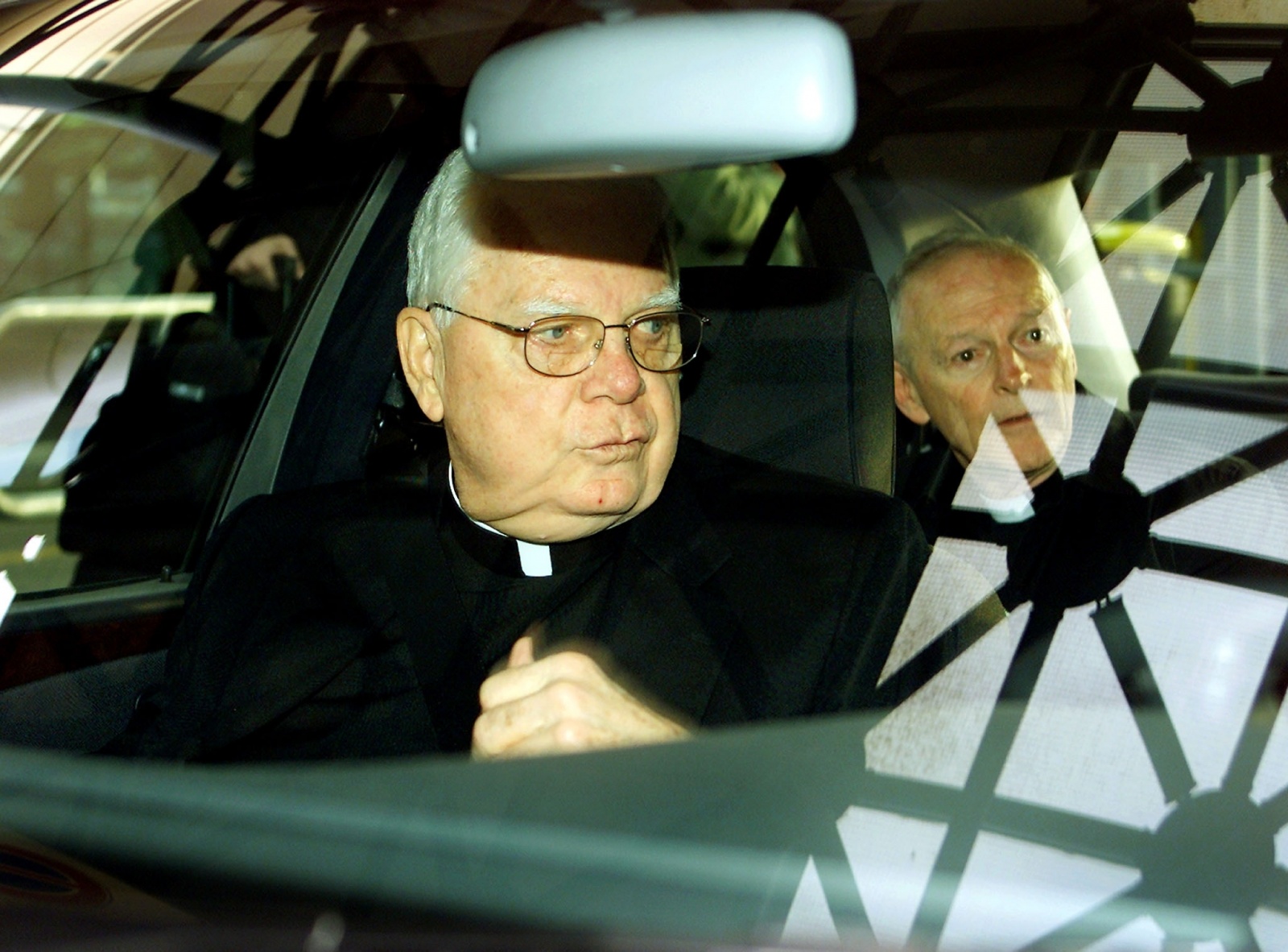
In a sense, however, that attempt at metanoia has failed—and we should remember this now that the preparation of the Jubilee of 2025 is underway. The abuse crisis has done more than sweep away the triumphalism of the Jubilee of 2000. It has also revealed just how inadequately (almost embarrassingly so) the Church handled its “purification of memory,” considering what happened soon after: the protection given at both the institutional and local levels to Cardinal Bernard Law, Fr. Marcial Maciel, and other notorious abusers and enablers; and the wasteland that grew between Catholic theology and the institutional Church.
In another sense, the outrage sparked by the abuse crisis and the ecclesial crisis more generally are signs of an ongoing metanoia. If we judge the Church and Christianity as profoundly different from what the Gospels led us to expect, we do so precisely because we refuse to ignore those expectations. That is why we feel the scandal of their denial. If we were able to regard the Church outside this horizon of expectation, the scandal would actually end.
Still, the Church’s memory problem negatively affects the chances of an ecclesial metanoia. The time will soon come to articulate a hermeneutics of the Church’s past. This will have to include what was overlooked in Vatican II, the post–Vatican II Church of Paul VI, and John Paul II’s requests of forgiveness. (Benedict XVI did not believe in the fruitfulness of these mea culpas until the abuse crisis brought him around.)
Pope Francis has hinted at something like the need to re-examine history in light of the abuse scandal. In his December 21, 2018, address to the Roman Curia, at the end of a year that began with the catastrophic visit to Chile and Peru and that also included the McCarrick case, Francis talked about the need for an adequate hermeneutic of history: “Let it be clear that before these abominations the Church will spare no effort to do all that is necessary to bring to justice whosoever has committed such crimes. The Church will never seek to hush up or not take any case seriously. It is undeniable that some in the past, out of irresponsibility, disbelief, lack of training, inexperience—we need to judge the past with a hermeneutics of the past—or spiritual and human myopia, treated many cases without the seriousness and promptness that was due.”
Yet this still isn’t happening. It is probably the only way to give the “synodal process” a chance. But the Church maintains a defensive posture—defending its authority as well as its tradition, including defending Vatican II from the attacks of traditionalists. Church politics dominates the conversation at the highest level: the focus on Pope Francis’s pontificate, his possible resignation, and the maneuvers for the next conclave. (See the manifesto written and circulated anonymously last year by Cardinal George Pell, in which he blasted Francis.)
Credit: Source link


