


An honest approach is needed to address potential abuses while recognizing benefits for both Japan and immigrants
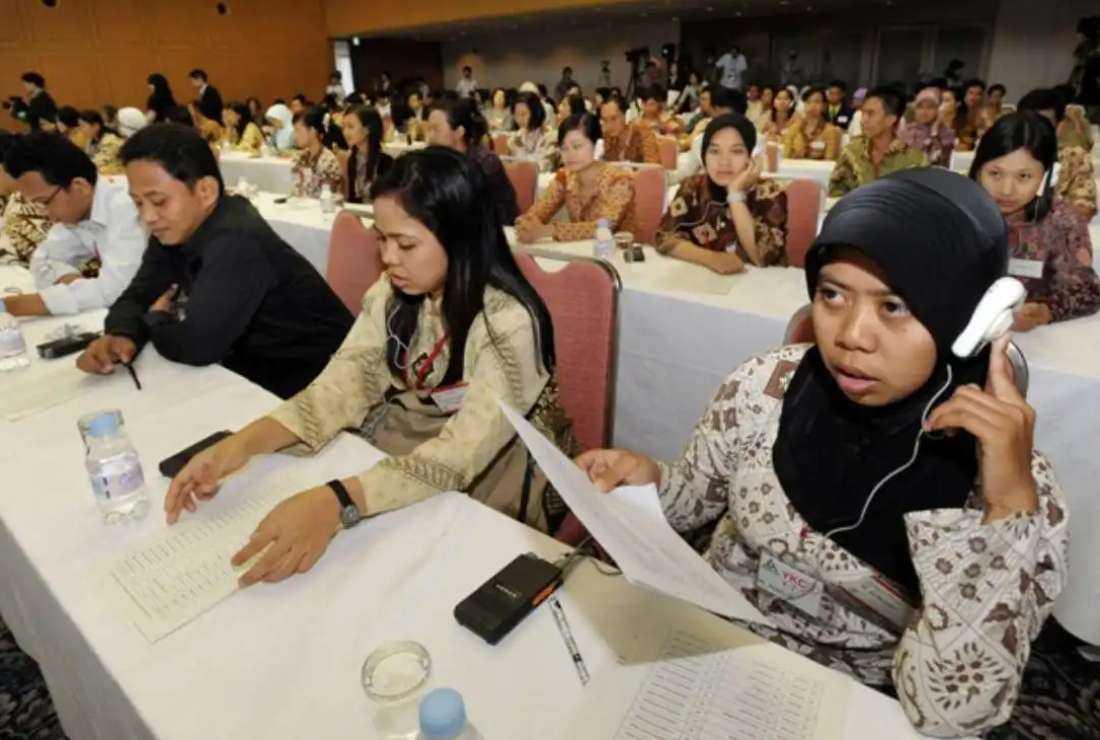
Indonesian candidates for nurses and caregivers receive Japanese language lessons in Tokyo. Indonesian workers have been steadily increasing in Japan and saw the highest year-on-year growth in 2023. (Photo: AFP)
The Japanese government recently announced an ambitious plan to overhaul its controversial foreign trainee program. Historically criticized as a mere front for importing cheap labor, the revised initiative aims to provide genuine skills training while safeguarding the rights of trainees.
This change is widely interpreted as Japan’s strategic response to its dwindling and aging population, which has created a pressing need for more foreign workers across various sectors.
The revamped program proposes that trainees holding a three-year visa can advance to a skilled worker category. This upgrade not only extends their stay to five years but also opens a pathway to permanent residency, contingent upon parliamentary endorsement.


This initiative emerges in the wake of extensive criticisms and reports of exploitation under the existing framework, prompting calls for substantial reforms to rectify labor rights violations and enhance the working and living conditions of foreign trainees.
Criticism of the former trainee system, however, may not fully capture the complexities and nuances of the issue.
For one, Indonesian workers have been steadily increasing in Japan. As of the end of last October, Japan had 2,048,675 foreign workers, with Vietnamese workers being the largest group at 518,364. But Indonesian workers saw the highest growth at 56 percent year on year.
“The testimonies from foreign workers about their lives in Japan are predominantly positive”
The increase in Indonesian workers is not due to Japan seeking less expensive labor for exploitation, but is simply due to a more favorable exchange rate and lower costs for Indonesians to travel to Japan compared to other nationalities like Vietnamese.
Also, let’s address the exploitation issue directly. Drawing from personal encounters rather than broad media narratives, my experience suggests a very different story. Engaging with numerous Indonesian and Filipino women employed in Japan’s healthcare sector has offered me firsthand insights into their experiences.
When inquiring about their work conditions and whether they’ve faced discrimination or exploitation, the responses have been overwhelmingly positive. When I pushed them to mention anything they would want to change in their current situation it was a general sense of being looked down upon to due to language barriers — not exploitation.
But it’s crucial to note that many of these workers are stationed in Japan’s rural areas, far from metropolitan hubs like Tokyo and Osaka. These regions, primarily inhabited by an older demographic, might not always align with cosmopolitan attitudes, potentially contributing to the sense of alienation some workers feel.
Despite these challenges, the testimonies from foreign workers about their lives in Japan are predominantly positive. They often laud the superior lifestyle and financial benefits available in Japan compared to their home countries.
The remittances these workers send home significantly bolster their families’ well-being, supporting several relatives on a single salary. This level of financial contribution is unparalleled by their Japanese counterparts in similar roles, who often express dissatisfaction with their wages — citing the high cost of living and rent as significant burdens.
“The media often focuses on negative stories because they tend to attract more viewers and readers”
A telling interaction that further illuminates this issue involved two Vietnamese individuals I met while walking along a dry riverbed. Tasked with removing weeds, one, who had been in Japan for six years doing this job, expressed complete satisfaction with his employment. He highlighted the salary — triple what he could earn in Vietnam — and the ability to financially support his family, including two children.
Such personal accounts entirely contradict the portrayal of the trainee program as simply a strategy for importing cheap labor. They prompt a re-evaluation of whether these workers would genuinely prefer to quit their contracts and return to their native countries.
Throughout my decade in Japan, not once have I encountered a foreign worker, from Vietnamese meat cutters in Shimane Prefecture to Brazilians in the microchip industry, who wished to leave.
The debate over the trainee program highlights the need for a more honest approach that addresses potential abuses while recognizing the economic and social benefits for both Japan and the workers’ home countries.
It’s widely acknowledged that the media often focuses on negative stories because they tend to attract more viewers and readers. However, when the media’s narrative starkly contradicts our own experiences, it may be time to consider that there could be underlying editorial or ideological motives for obscuring the truth.
If the intention behind these stories is primarily to generate widespread circulation, then it’s clear the media is not fulfilling its duty.
*The views expressed in this article are those of the author and do not necessarily reflect the official editorial position of UCA News.



Dear reader,
November begins with the Feast of All Saints. That month in 2023 marked the beginning of a new UCA News series, Saints of the New Millennium, profiling some of Asia’s saints, “ordinary” people who try to live faithfully amid the demands of life in our time.
Perhaps the closest they will ever come to fame will be in your reading about them in UCA News. But they
are saints for today. Let their example challenge and encourage you to live your own sainthood.
Your contribution will help us present more such features and make a difference in society by being independent and objective.
A small donation of US$5 a month would make a big difference in our quest to achieve our goals.

William J. Grimm
Publisher
UCA News
Latest News
Credit: Source link


