


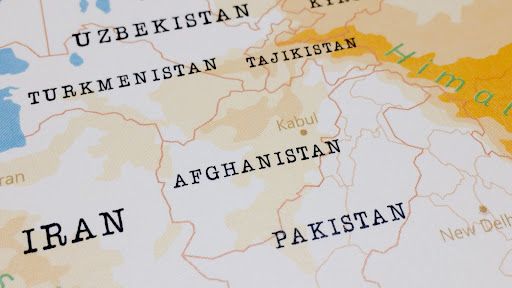
Teske turned to the faith nurtured by her upbringing and parochial Catholic school as she struggled with survivors’ guilt, asking God why she trained for Afghanistan but didn’t go.
“And I always wondered, you know, what if it would have just been me, you know, instead of them,” she said about her fellow marines who died in combat in Afghanistan.
Now retired from the Marines after 23 years of service, Teske thinks her training for Afghanistan and her interior struggles over not fighting there alongside her comrades have taken on new meaning.
“Fast forward to when Afghanistan fell in August. I just had it in my heart that perhaps God was preparing me for something bigger.”
According to Teske, that something bigger would be her involvement with Afghanistan at the end of the war rather than the beginning; an experience that would require her 23 years as a marine, but also as an operational planner and strategist, as well as her extensive network within the military, Department of State, corporate world, and geopolitical contacts in other countries.
“When Afghanistan fell, I had it on my heart to kind of lean in and be part of a solution rather than turning our backs and saying there’s nothing we can do,” Teske said. “That wasn’t acceptable to me, so like many, many, many, many countless veterans we all leaned in to make it right to change the trajectory of history, and that’s kind of become my role and my mission and my passion.”
She immediately began working as the strategic director for the Human First Coalition, then assisting Pineapple Express, Sanctuary, and other paramilitary operators evacuating Americans, Christians, and other vulnerable people from Afghanistan.
“So I was leveraging my network with the Department of State teams and agency teams that were on the ground to basically ask for personal favors,” said Teske about her initial involvement. “I was …able to geolocate them, give them their points and get them pulled. I also had contact with Marines that were at the gates and teams that were at the gates, so I was calling them directly, giving them identifying markers to pull people out and bring people to safety.”
According to Teske, that launched her into the rescue operations field with numerous groups who eventually each began to focus on one area on the ground— some providing safe houses, other evacuations, others food.
But even as various NGOs and nonprofit organizations were developing niche operations, the world’s attention was about to shift.
(Story continues below)
‘We had 72 hours’ notice’
Getting people out of Afghanistan and away from the Taliban was only the first hurdle, however.
The next phase has proven just as complex, as many organizations struggle to come up with the funding and other resources to shelter, feed, and protect refugees stuck in legal limbo.
“The rescue is sexy, right?” said Teske. “But how long can you afford to keep them alive before they’re sold as slave laborers? Or they’re sent back to Afghanistan or extradited?”
That possibility became reality for 250 Afghans last week when Jason Jones, who heads the humanitarian charity Vulnerable People Project, was given 72 hours’ notice that an organization providing safe housing for refugees in Pakistan was folding due to insufficient funds.
“We had 72 hours notice that we had 250 people that were going to be let out onto the street sent back to Afghanistan and probably be killed, so my team and I began to prepare to move them,” said Jones, who ultimately partnered with Teske in the move. She handled the logistics while he tackled the fundraising — an overwhelming task when lives are a stake.
Credit: Source link


