


Living Thomism
Although 750 years have gone by since the great saint died (March 7), the thought of St. Thomas did not die with him but continued to develop over time and is today known as “living Thomism.”
Today, both religious and laymen and women from the world over travel to Rome to study the thought of the great saint at the Angelicum, built on the legacy of the Dominican order’s first Roman university at the priory of Santa Sabina in Rome, founded in 1222.
“The students, wherever they come from, are faced with incredible cultural and intellectual challenges,” Bonino said, “and so they are looking for a tradition that is well rooted in the history of the Church, in order to be able to face these issues.”
“And Thomism, which has been and is still very much recommended by the magisterium of the Church, gives these students the keys and tools they need” to do so and to “promote a Christian vision of man, culture, and society,” he said.
“St. Thomas offers us an image of the human being that’s being forgotten today,” Gina Pribaz, 54, a student of spiritual theology at the Angelicum from the United States, told the Register. “It’s such a bedrock notion of man created in the image of God, of an embodied soul, and we need to really study what that means and how we can offer an explanation of that to others.”
Drawn to study the theology of St. Thomas in order to enrich her spiritual life, Pribaz added, “St. Thomas gives us such a depth of knowledge and a systematized and integrated way of understanding the faith, and I found that very attractive.”
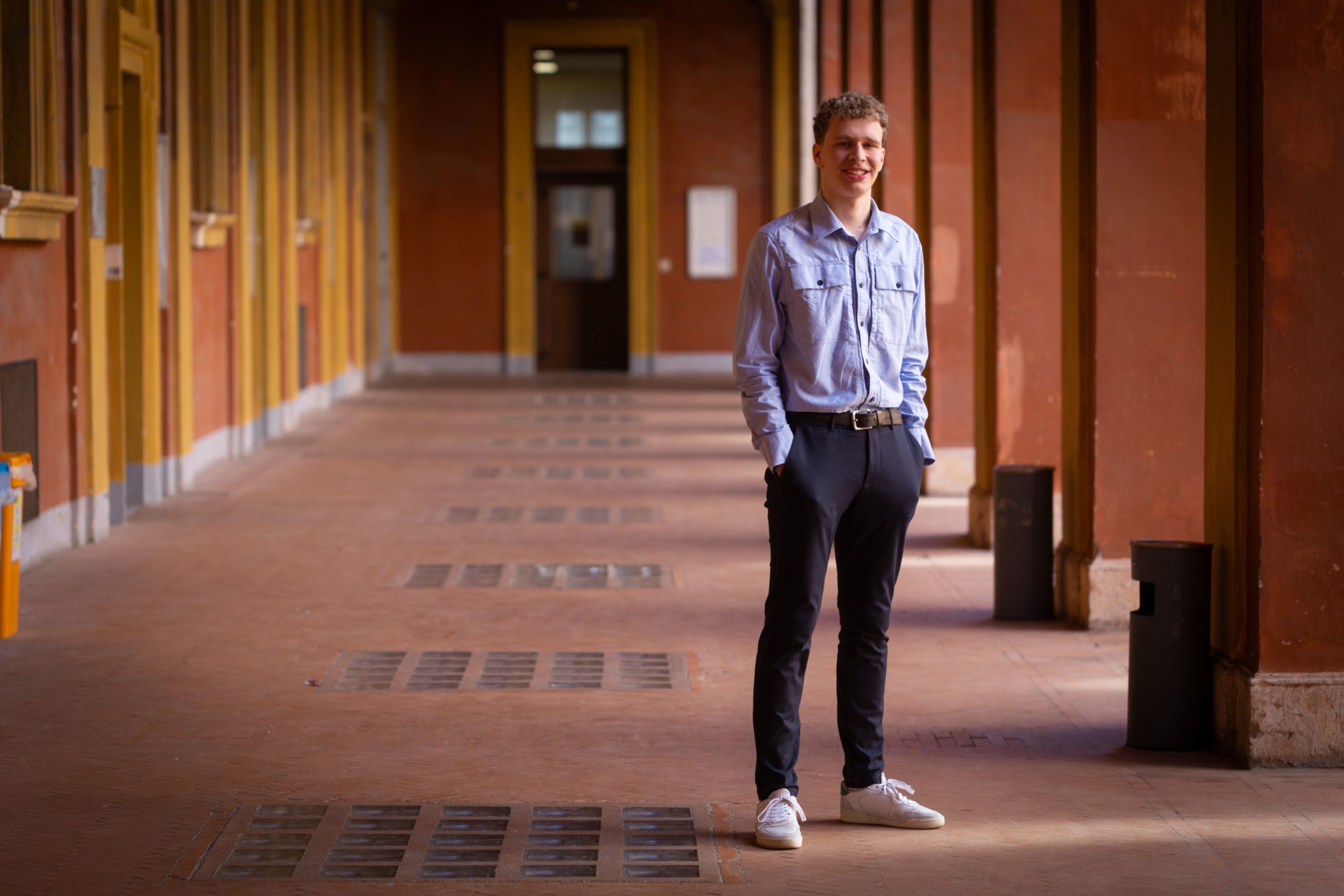
Similarly, Franssen, the 18-year-old Belgian, commented, “Something really striking to me is the rationality of St. Thomas. We live in a world where it is commonly thought that faith is for the ignorant, that faith is irrational, unreasonable, but it’s not.”
“I believe that learning more about St. Thomas’ rationality that suffuses not only in his philosophy but in his whole work, really helps us not only to understand but also deepen and promote our faith.”
“Many think that because medieval theologians or philosophers are dead, so are their thoughts,” Zhihua Duan, 28, a doctoral student in philosophy at the Angelicum from China, told the Register. “But it’s not true. Looking at some of our contemporary problems, we can easily find the answers already present in the 13th century.”
(Story continues below)
Subscribe to our daily newsletter
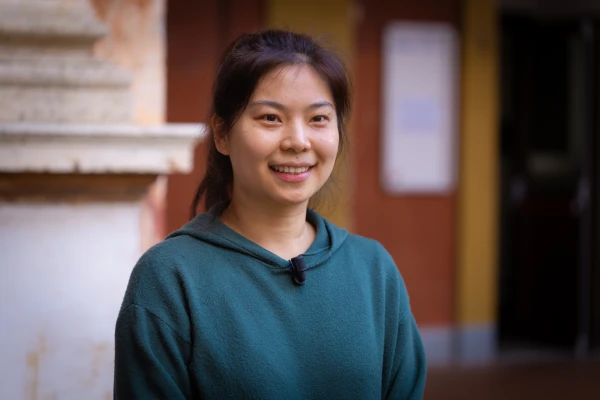
Currently pursuing her doctorate in philosophy at the Angelicum, Duan is now finishing her doctoral thesis titled, “An Analogical Explanation of Aquinas’ Anthropology in Relation to His Political Beliefs.”
“One of the many things that I found very interesting in St. Thomas’ philosophy is his attempt to introduce natural beings and the natural existence to us,” Duan shared.
“Often, people want to start with the higher disciplines and, for example, immediately study the Trinity. But Aquinas starts with the natural existence to help us better understand what we are so that we can subsequently analogously speak about what God is.”
Reflecting upon the many things St. Thomas can teach us today, Pribaz added, “the idea that faith goes hand in hand with reason,” which remains “a stumbling rock for many people,” as well as the notion of “prayer as the interpreter of desire.”
“I know a lot of people, myself included, who wonder what it is they want in life, what they should be doing, how they should spend their time and use their gifts,” Pribaz said. “Because of that, I find St. Thomas’ notion — that being in dialogue with God in prayer reveals what we want, and that God interprets for us within our hearts what we want — beautiful.”
Credit: Source link


