


Pakistan
Court must rule on whether refusing to allow a no-confidence vote against PM Imran Khan violated the constitution
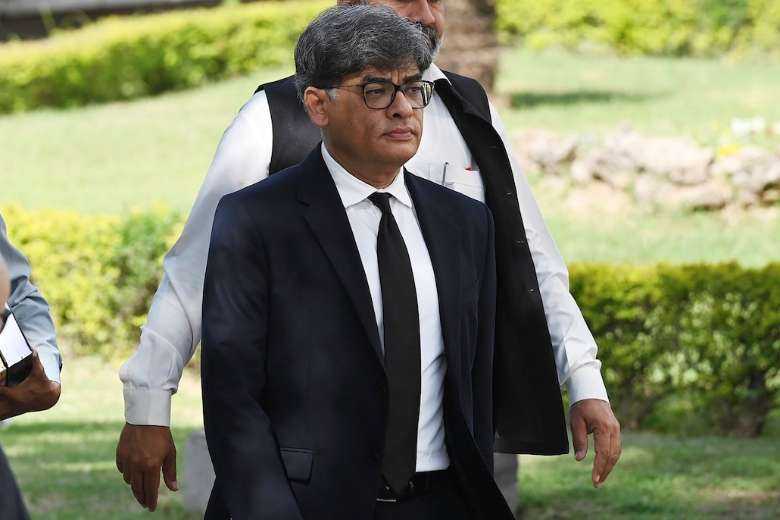
Pakistan’s Attorney General Khalid Jawed Khan arrives to attend a hearing at the Supreme Court in Islamabad on April 7. (Photo: AFP)
President Arif Alvi has told Pakistan’s election commission to fix a date for a new national ballot as the Supreme Court adjourned a hearing into the legality of political maneuvers that led to parliament being dissolved.
The court, which was today sitting for a fourth day, must rule if the deputy speaker of the National Assembly violated the constitution by refusing to allow a no-confidence vote against Prime Minister Imran Khan at the weekend.
Had the vote taken place, Khan was certain to have been booted from office, but the move allowed him to get the loyalist president to dissolve parliament and order an election.
Thank you. You are now signed up to Daily newsletter
SIGN UP NOW!
Stay up to date Don’t miss out on the latest News
The opposition have cried foul and are refusing to cooperate with forming an interim government to oversee any ballot, but on April 6 Alvi upped the ante.
A statement from his office said the election commission had been told to propose a date “in order to carry out the mandate of the constitution.”
While the opposition applied its resources to the court, Khan effectively hit the campaign trail, telling party workers in Lahore that he would be more careful in picking candidates to stand for his Tehreek-e-Insaf (PTI) party.
“The Free and Fair Election Network has identified multiple constitutional, legal and operational challenges to the conduct of an early election”
Khan’s woes started weeks ago when rebel PTI lawmakers threatened to vote against him, but his fragile ruling coalition was beginning to unravel anyway.
There had been high hopes for Khan when he was elected in 2018 on a promise of sweeping away decades of entrenched corruption and cronyism, but he struggled to maintain support with soaring inflation, a feeble rupee and crippling debt.
Nuclear-armed Pakistan has been wracked by political crises for much of its 75-year existence, and no prime minister has ever seen out a full term.
Whether the election commission has the capacity to organize a ballot within 90 days remains to be seen, with a watchdog group warning this week of “grave concerns” for potential violence.
“The Free and Fair Election Network has identified multiple constitutional, legal and operational challenges to the conduct of an early election,” said the group.
“Public confusion and political divisions that have already arisen as a result can potentially translate into violent expression.”
“On one side judges will declare the ruling of the deputy speaker as unconstitutional, but at the same time will justify the fresh elections … as every political party wants to go for a fresh election”
Khan has already blown anti-US sentiment into the political atmosphere by saying the opposition had colluded with Washington for “regime change.”
The cricketer-turned-politician says Western powers want him removed because he will not stand with them against Russia and China, and the issue is sure to ignite any forthcoming election.
The Supreme Court is ostensibly independent, but rights activists say previous benches have been used by civilian and military administrations to do their bidding throughout Pakistan’s history.
Publicly the military appears to be keeping out of the current fray, but there have been four coups since independence in 1947 and the country has spent more than three decades under army rule.
“I don’t think the court is going to deliver any noticeable decision. It will be a sort of doctrine of necessities,” said Ayesha Siddiqa, an independent analyst.
“On one side judges will declare the ruling of the deputy speaker as unconstitutional, but at the same time will justify the fresh elections … as every political party wants to go for a fresh election.”
Latest News
Credit: Source link


